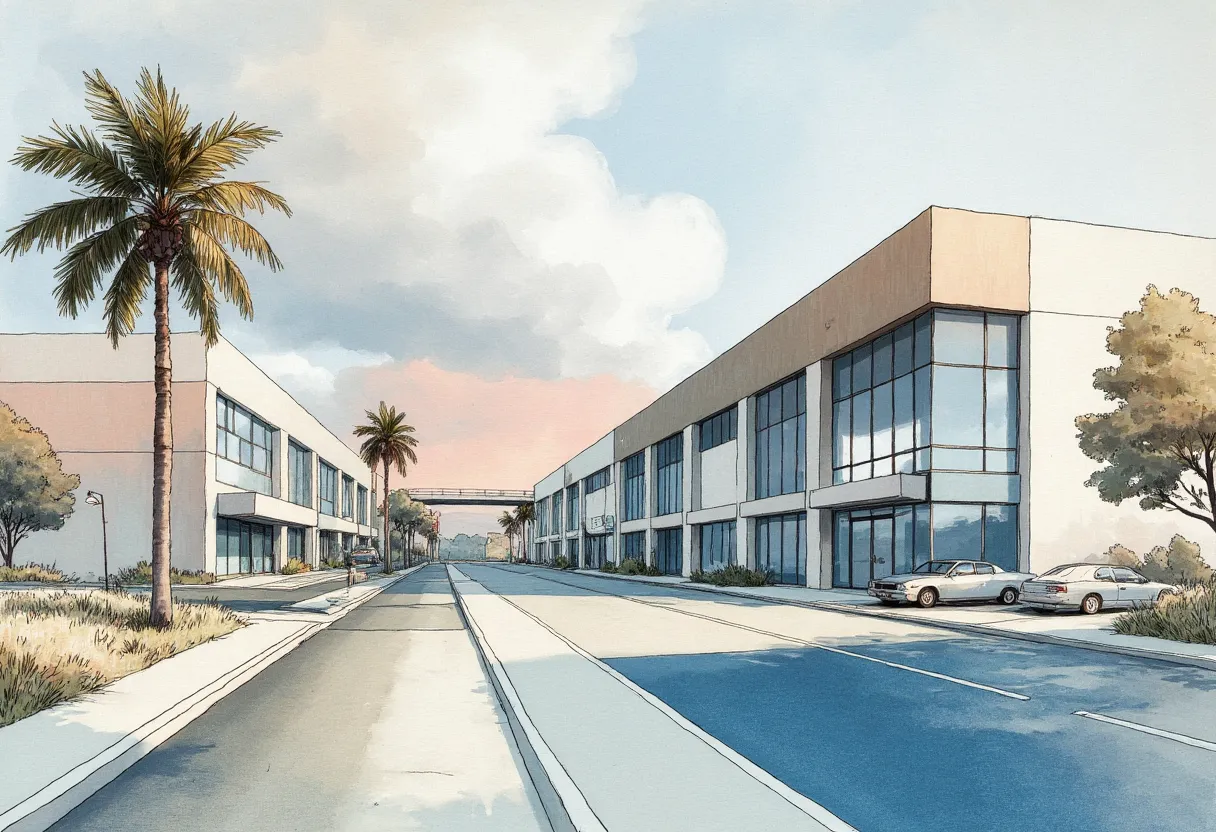
As residential real estate in Pinellas County faces rising insurance costs, regulatory hurdles, and unrealistic seller expectations, one commercial sector has remained resilient: industrial properties located on high-traffic corridors. According to Mark Hartman, team leader at Charles Rutenberg Realty and a veteran of both commercial and residential markets, the contrast between these property types is increasingly evident.
“Industrial is still hot, and you want to have a location that’s high traffic, high volume,” Hartman says. “Industrial, just for income property, is still a real hot commodity.” While residential sellers contend with growing inventory and declining buyer demand, industrial properties continue to attract investor capital and offer stable returns.
Why Industrial Properties Stand Out
Industrial real estate’s appeal, Hartman explains, is rooted in tenant stability, long-term leases, and insulation from the challenges affecting residential assets. Industrial tenants, typically businesses reliant on physical distribution, sign longer leases and require less ongoing management than residential renters. This reduces vacancy risk and ensures steady cash flow, even during economic slowdowns.
“If you’re looking at it for income and not for development, you want something with a good cap rate that’s fully rented on a high-traffic road,” Hartman says. The emphasis on traffic volume highlights the importance of logistics and accessibility. Warehouses and distribution centers near major routes and with consistent traffic flow command premium prices because they serve essential roles in supply chains and e-commerce.
Industrial properties are also less exposed to the insurance challenges and regulatory changes currently destabilizing Florida’s residential market. Unlike condos, industrial buildings are not subject to milestone inspections, reserve study mandates, or special assessments. Flood risk is often lower, and tenants are businesses rather than individual homeowners, reducing financial instability linked to owner defaults.
Limited Supply Creates Competition
Despite the sector’s strengths, investors face a significant hurdle: scarcity of quality industrial assets. “There are only a few properties like that to come up here from time to time,” Hartman notes. “But those are the good investments on the commercial side. Those are still hot trends.”
Hartman points to a potential listing his team is preparing—an industrial property on State Road 688, expected to list between $2.5 and $2.7 million. Its location offers high visibility and traffic, making it attractive to large retailers or distribution operators. Properties with these attributes tend to sell quickly, often before they reach the broader market.
For smaller investors, the limited supply of desirable industrial properties presents a challenge. While residential inventory has increased, creating opportunities for buyers willing to negotiate, owners of fully leased industrial buildings on prime corridors have little incentive to sell. This tight supply means that investors looking to enter the industrial sector must act quickly when an opportunity arises and often rely on established relationships with brokers to access deals.
Other Commercial Sectors Face Mixed Conditions
Not all commercial real estate offers the same level of stability as industrial real estate. Hartman says retail properties can still perform well, but success depends heavily on location and tenant quality. “Retail, not as much, but retail still can be strong if it’s an established business location with high traffic volume, especially if it’s a destination,” he explains.
Retail properties in established, high-traffic areas with stable tenants can generate reliable income. However, new retail development faces headwinds as consumer preferences shift toward online shopping, reducing demand for traditional storefronts.
Multi-family residential properties occupy a middle ground. “Strip malls are popular if they’re fully rented, 100 percent occupancy tenancy, but industrial still on the commercial side seems to be really hot,” Hartman says. Multi-family can offer steady income, but investors must weigh flood risk, rising insurance costs, and local rental restrictions.
In particular, many coastal Pinellas County communities restrict short-term rentals, reducing the appeal of multi-family properties to investors targeting Airbnb or VRBO income. Hartman advises investors to carefully research local regulations and ensure that any multi-family acquisition aligns with their intended business model.
Where Investors Are Putting Their Money
For investors with at least $500,000 to deploy in Pinellas County, Hartman believes industrial real estate offers the most reliable risk-adjusted returns. The fundamentals remain solid—tenant quality is high, leases are stable, and the sector is largely insulated from the volatility affecting residential markets.
However, the downside is availability. High-quality industrial properties are scarce and sell quickly when they hit the market. Investors interested in this sector need to be patient, cultivate relationships with specialized brokers, and be prepared to move quickly when opportunities arise.
Hartman’s assessment reflects a broader trend in commercial real estate: while other sectors face uncertainty or increased risk, industrial properties in strategic locations continue to attract capital and outperform. Whether this trend will persist as interest rates and economic conditions fluctuate remains uncertain. For now, though, industrial remains one of the few commercial segments in Pinellas County where fundamentals are strong, and investor demand regularly outstrips supply.