Dotmatics Luma Achieves Databricks Gold Status and Joins the Marketplace
PR Newswire
BOSTON, Oct. 6, 2026
The Scientific Intelligence Platform for AI-driven discovery is now available to every organization building on Databricks
BOSTON, Oct. 6, 2026 /PRNewswire/ -- Dotmatics, a leader in R&D scientific software connecting science, data, and decision-making, today announced that Luma, its Scientific Intelligence Platform, has achieved Gold tier status in the Databricks Brickbuilder Partner Network and is now available on the Databricks Marketplace: https://marketplace.databricks.com/details/9257f218-e206-4170-aa19-2e3a17e2d7b4/Dotmatics_Luma-The-Scientific-Operating-System-for-the-SelfDriving-Lab.
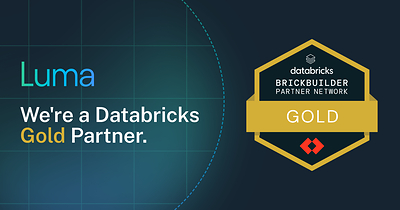
The milestones mark a significant expansion of the strategic partnership the two companies announced in December 2024, deepening Luma's integration into the Databricks Data + AI Platform and making it directly accessible to the 20,000+ organizations actively building on Databricks.
Gold tier is reserved for partners demonstrating outsized customer impact and deep strategic alignment with Databricks, requiring validation across two partner paths and a $1M+ total contract value commitment. It represents the highest level of recognition available to non-Platinum partners in the Databricks Brickbuilder Partner Network, and reflects Luma's growing adoption among life sciences and R&D organizations seeking an enterprise-grade foundation for AI-driven discovery.
"Scientific data has always been immensely diverse and complex. For the first time, the infrastructure exists to do something truly powerful with it, however getting the underlying foundation right is essential to unlocking that potential," said Steve Tharp, president of Dotmatics. "Researchers get an AI-native platform built to orchestrate and preserve scientific context across the entire make-test-decide-analyze cycle. Every result is captured, every insight feeds the next experiment, all on the infrastructure their IT and data teams already govern and trust."
The Databricks Marketplace listing makes Luma discoverable and deployable by scientists, engineers, and IT teams across the Databricks customer base, enabling organizations already operating on Databricks to adopt Luma without requiring a separate data infrastructure.
Where Instrument Data Becomes Enterprise Intelligence
Modern scientific workflows generate data at extraordinary scale, but the real challenge is context. As data moves from instruments to analyses to decisions, the critical reasoning behind the results is often lost, and when AI models are trained on fragmented, unharmonized data, their outputs cannot be trusted.
Luma addresses this at the point of capture. Built natively on Databricks as one of the first companies in the Built On partner program, Luma acts as an orchestration layer that unifies data across instruments, systems, and workflows into a single connected layer. It continuously ingests instrument outputs and harmonizes them into FAIR-compliant structured data in real time, so AI can reason over live lab data as experiments unfold. Scientific context travels with the data from wet to dry lab, so the reasoning behind every result is preserved right along with the result itself, and every insight feeds the next experiment without a manual handoff in between. That complete record is then immediately available for analysis, modeling, and AI, with every answer traceable back to its source.
Plus, since Luma runs on Databricks that means its scientific data sits on the Databricks Data + AI Platform, alongside the broader enterprise data organizations already govern and use for analytics and AI, next to the manufacturing, supply chain, quality, and clinical systems that run the business. Luma layers scientific context onto that data, so teams turn what Databricks already holds into decisions instead of leaving it locked in silos. Databricks' OpenSharing enables seamless, governed data exchange with CROs and academic partners without compromising integrity. And as organizations scale, they do so on a single stack of connected tools. That same connected stack carries scientific intelligence across biology, chemistry, and formulations as programs move from research through development and into tech transfer, closing the handoff gaps and format conversions that have historically stalled programs at each stage.
"Luma exemplifies the transformative potential of building on Databricks, and it's incredible to watch its adoption among the biopharmaceutical community who are excited to harness the full power of their data," said Michael Sanky, VP of Healthcare & Life Sciences, Databricks. "When lab data is governed and connected at enterprise scale, everything improves together—time to insight, decision confidence, late-stage success rates. Making Luma available on Databricks Marketplace is the next step in putting that foundation in the hands of life sciences organizations already building on Databricks."
From Concept to Production: Agentic AI in the Lab
AI and data workloads on Databricks are growing more than 65% year-over-year, and life sciences organizations are moving rapidly from evaluating AI to deploying it in regulated workflows. Luma Agent, launched in May 2026, executes multi-step scientific work, analyzing data, generating reports, managing workflows through plain-language instructions, while maintaining the full traceability that regulated environments demand. By grounding agentic AI in governed scientific and enterprise data, Luma and Databricks can help organizations move AI applications and agents from experimentation into production, while maintaining the context and control enterprise AI requires.
Luma serves organizations across more than nine industries, from biotechnology and pharmaceuticals to advanced materials, agriculture, consumer products, energy, and beyond—supporting scientific workflows from drug development and genomics to synthetic biology, therapeutics, cell biology, formulations, and analytical chemistry.
More than 2 million scientists and 14,000 customers across over 180 countries trust Dotmatics to support their research. Listing Luma on Databricks Marketplace extends that reach, making it easier for Databricks customers in life sciences to access a platform built specifically for the way scientific work happens.
Luma is available on Databricks Marketplace now. Organizations can request access directly through the marketplace listing at https://marketplace.databricks.com/details/9257f218-e206-4170-aa19-2e3a17e2d7b4/Dotmatics_Luma-The-Scientific-Operating-System-for-the-SelfDriving-Lab.
About Dotmatics
Dotmatics is a leader in R&D scientific software connecting science, data, and decision-making. Its enterprise R&D platform and scientists' favorite applications drive efficiency and accelerate innovation. More than 2 million scientists and 14,000 customers trust Dotmatics to help them create a healthier, cleaner, safer world. Dotmatics is a global team dedicated to supporting its customers in over 180 countries. The company's principal office is in Boston, with 13 offices and R&D teams located around the world. Dotmatics is part of Siemens Digital Industries Software.
 View original content to download multimedia:https://www.prnewswire.com/news-releases/dotmatics-luma-achieves-databricks-gold-status-and-joins-the-marketplace-302899675.html
SOURCE Dotmatics
