
Collision Care Xpress has updated its consumer information on advanced driver-assistance systems, adding new guidance on how vehicle identification, sensor location, repair operations, and manufacturer procedures can determine which ADAS-related procedures apply after collision repairs.
The September update shifts the company's previous consumer information from a general explanation of ADAS technology to a more specific look at procedures that may follow collision repairs. The expanded material distinguishes scanning, calibration, aiming, and initialization while explaining why those operations cannot be assigned solely because a vehicle has cameras, radar units, or sensors.
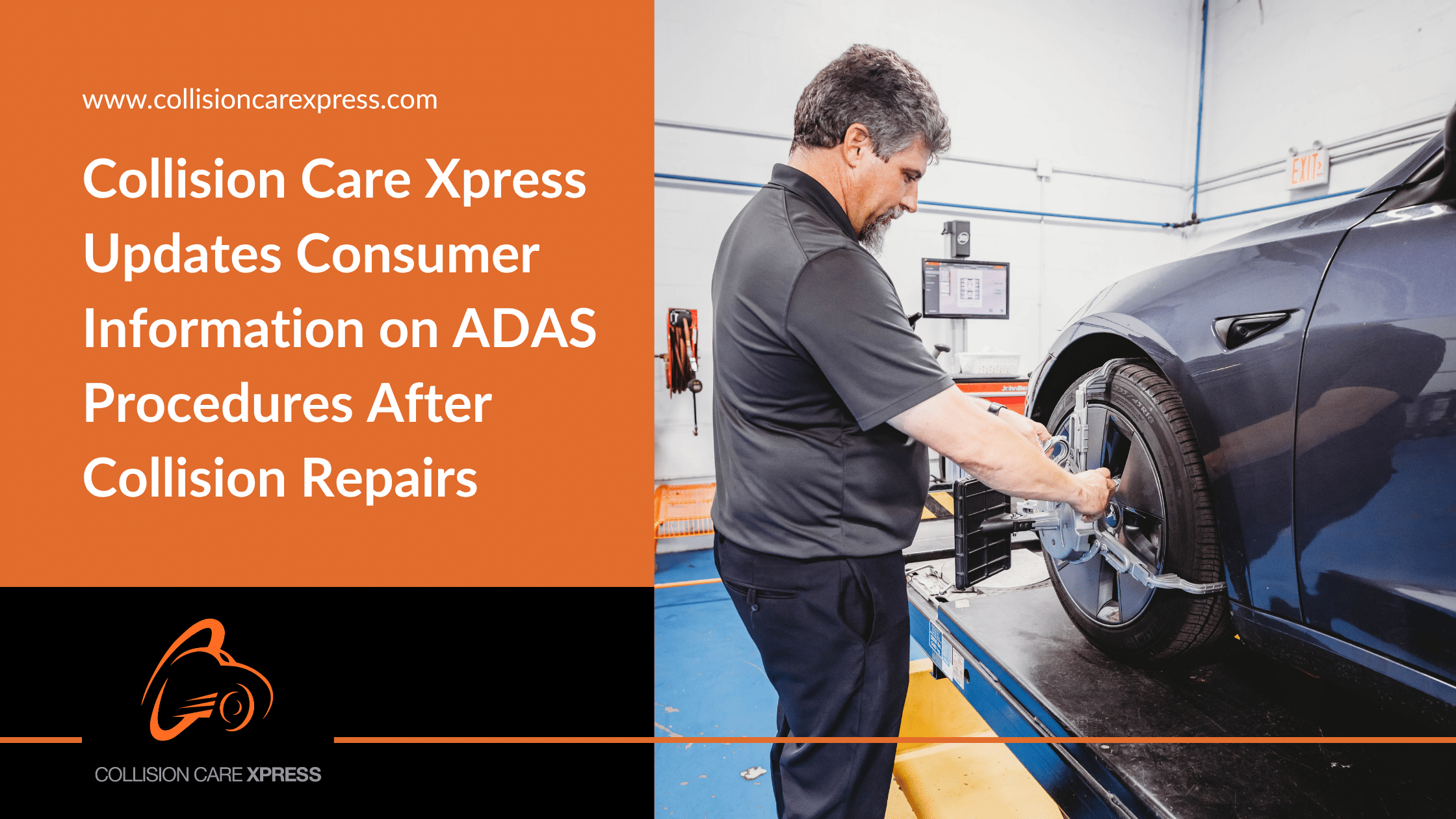
Collision Care Xpress developed the updated information for vehicle owners served by its Daytona Beach facility. The resource is intended to clarify terminology consumers may encounter during collision repair without suggesting that every accident or repair involving an ADAS-equipped vehicle requires calibration.
Advanced driver-assistance systems, commonly referred to as ADAS, can use cameras, radar, ultrasonic sensors, and other equipment to support functions available on individual vehicles. Depending on vehicle design, components associated with these systems can be positioned in windshields, bumpers, grilles, mirrors, lamps, and other areas that may also be involved in collision repairs.
The September resource explains that identifying the vehicle and installed equipment is an important part of researching applicable procedures. Vehicles with similar exterior designs can have different sensor configurations depending on model year, trim level, options, and manufacturer specifications.
Repair operations are another focus of the update. Depending on manufacturer requirements, procedures involving certain ADAS components can be associated with removal, installation, replacement, alignment-related work, windshield replacement, or repairs involving areas where cameras or sensors are located.
The updated information distinguishes diagnostic scanning from calibration. Scanning can provide information from vehicle electronic systems, while calibration can involve establishing or verifying specified operating parameters for applicable cameras, radar units, or other components. Aiming and initialization are additional terms that may apply depending on the manufacturer and system.
Collision Care Xpress emphasizes that the presence of ADAS equipment does not independently establish which procedure is required. The applicable operation is determined from the individual vehicle, installed equipment, work performed, and relevant manufacturer repair information.
The September update also gives consumers examples of how these considerations can appear during collision repair planning. Forward-facing cameras may be associated with windshield areas on certain vehicles, while radar units or parking sensors can be positioned within or behind bumper assemblies.
When repairs involve those areas, technicians can identify the installed equipment and research manufacturer information associated with the work being performed. This approach avoids applying a universal calibration requirement to every windshield replacement, bumper repair, or ADAS-equipped vehicle.
I-CAR provides additional industry context through its OEM Calibration Requirements Search, which compiles researched information from vehicle manufacturer procedures concerning circumstances in which calibration may be specified for particular ADAS components and repair operations.
Collision Care Xpress references I-CAR as an independent collision repair technical resource. The company's September consumer information is its own educational material and is not presented as an I-CAR publication, standard, sponsorship, affiliation, or endorsement.
The update also addresses how ADAS research can fit into a broader collision repair plan. An initial evaluation can document visible damage and affected components, while vehicle-specific research can identify procedures associated with those components or the operations required to repair them.
Additional information discovered as repair planning progresses may involve mounting areas, brackets, wiring, sensors, or equipment located behind exterior components. Documented findings and applicable manufacturer procedures can then be incorporated into the repair plan when relevant.
For consumers, the September update organizes ADAS considerations around three central steps: identifying the technology installed on the vehicle, documenting repair operations involving that technology or nearby components, and researching manufacturer procedures associated with those operations.
The framework is presented as consumer education rather than a diagnostic or calibration standard. Whether scanning, calibration, aiming, initialization, component replacement, or another procedure applies depends on the individual vehicle and applicable technical information.
The September update expands Collision Care Xpress's previous ADAS information by moving beyond a general description of the technology and providing consumers with a more specific explanation of how ADAS procedures can become part of post-collision repair planning.
Additional information about ADAS repair is available through Collision Care Xpress. Independent technical information concerning manufacturer calibration requirements is available through I-CAR's OEM Calibration Requirements Search.
Company updates and additional information are also available through Collision Care Xpress on LinkedIn.
About Collision Care Xpress
Collision Care Xpress provides collision repair and related vehicle repair services through locations in Florida, including Daytona Beach. The company's services include collision repair, auto body repair, EV collision repair, ADAS-related repair services, fleet auto body services, and other vehicle restoration work.
###
For more information about Collision Care Xpress - Daytona Beach, contact the company here:
Collision Care Xpress - Daytona Beach
Robert Molina
386-267-0904
dbservice@collisioncarexpress.com
418 N Segrave St, Daytona Beach, FL 32114